Northeastern State University Centralizes the Student Housing Experience into One Connected System with StarRez
Key Highlights

50% faster audit cycle
StarRez reduces audit and correction time from ~four days to two.

450 annual requests automated
StarRez supports automated workflows for approximately 450 Residency Exemption and Contract Release Requests each year.

52+ hours saved annually
Automated scheduled reports reduce recurring administrative work by more than one hour per week.

25% room change efficiency gain
25% room change efficiency gain Automated categorization and centralized communication improve staff efficiency by at least 25%.

Region
Industry
Beds
Active Since
Product Highlights
Integrations
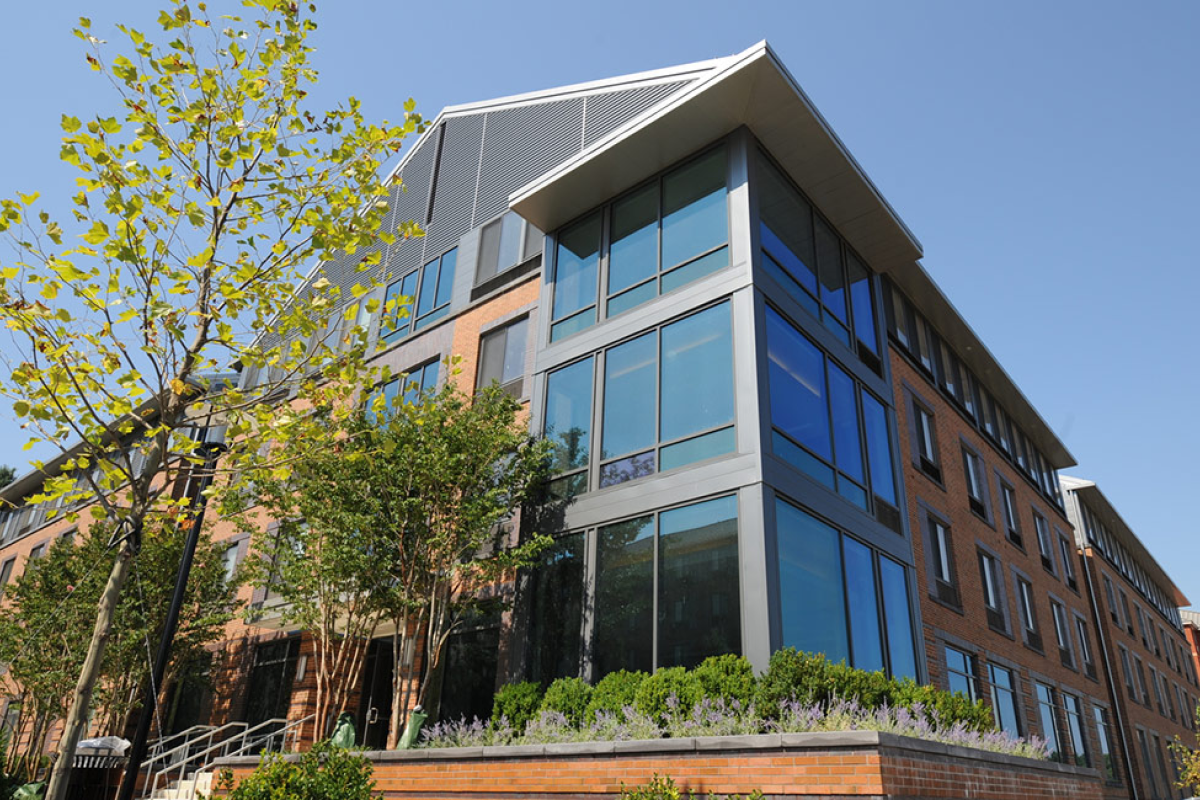
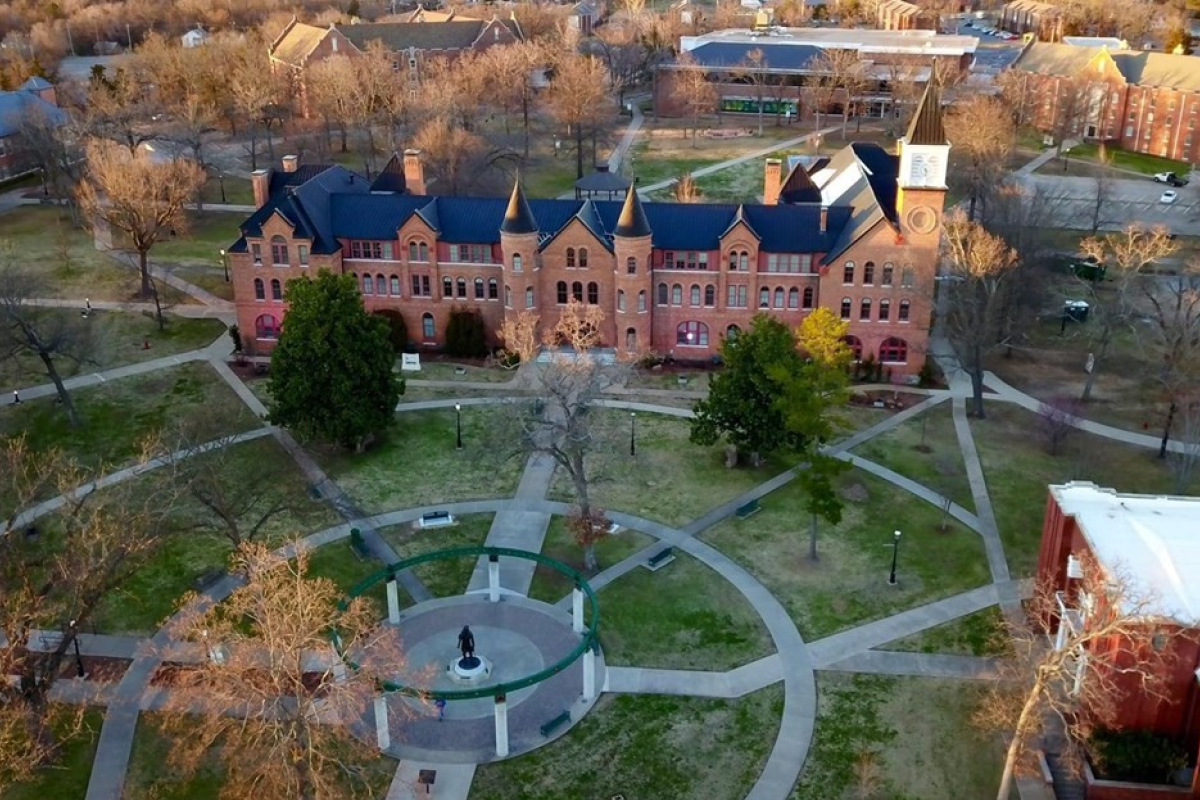
Northeastern State University (“NSU”) is a public regional university based in Tahlequah, Oklahoma, with additional campuses in Muskogee and Broken Arrow. NSU serves 8,000 students across three campuses and online, describing itself as Oklahoma’s immersive learning institution. On the Tahlequah campus, students can live in one of six residence halls, with Housing & Residence Life focused on making campus living convenient, affordable, and comfortable.
More Than a Software Migration
For NSU, the transition from Mercury to StarRez was more than a software migration. It was a chance to rethink the way housing operations supported students, staff, and campus partners across the full residential journey.
NSU had deep experience with housing management technology. Wes Wheeler, Assistant Director of Housing Operations at Northeastern State University, began working with the university’s RMS Classic implementation in 2008 before the institution later transitioned to Mercury. By the time NSU moved to StarRez, Wheeler and the Housing & Residence Life team had years of process knowledge to draw from along with years of inherited configurations to reconsider.
“We decided to start fresh with everything,” said Wheeler. “We reviewed all of our data sets, including buildings, how buildings were configured, and how floors were configured. It gave us a chance to rethink our naming conventions and keep up with newer trends in the industry.”
That clean-slate mindset became the foundation for NSU’s transition from Mercury to StarRez. With a small core implementation team, NSU rebuilt processes, centralized student requests, improved reporting, and created a stronger automation foundation for the future.
“The transition to StarRez gave us a chance to move away from things we were doing simply because that was the way they had always been done. Instead of carrying old processes into a new system, we were able to step back, rethink what we actually needed, and start fresh.”
- Wes Wheeler, Assistant Director of Housing Operations at Northeastern State University
Identifying Legacy Processes Spread Across Systems
Like many long-time Mercury users, NSU had processes that worked, but not always in the most efficient, transparent, or scalable way. Over time, some workflows had moved outside the housing system entirely. Room change requests, early arrival requests, ADA accommodation tracking, and other student-facing processes often relied on Google Forms, spreadsheets, email threads, and individual staff knowledge.
For a 1,250-bed housing operation, those workarounds created unnecessary friction. A request might begin in one place, be tracked in another, and require follow-up through a separate communication channel. That made it harder for staff to quickly identify priority requests, understand where a request stood, or maintain a full communication history in one accessible location.
“Moving from Google Forms and spreadsheets into StarRez transformed what had been a manual tracking process into one centralized workflow.”
- Wes Wheeler, Assistant Director of Housing Operations at Northeastern State University.
The challenge was not limited to Housing & Residence Life. Student housing data also affects campus partners such as the Bursar’s Office, ID Services, and Meal Plan Services. When information has to be manually audited, exported, or distributed, even routine work can create delays downstream.
Wheeler and his team also had to consider the broader technology environment at NSU. StarRez was one of the university’s early moves into cloud-based software, which meant the housing transition also became an opportunity to help IT gain confidence in a new model.
“StarRez was one of the first cloud services the university moved to, so it was a new experience for our IT team,” said Wheeler. “Once they realized it could be done, and that it could be simpler, it opened the door for other major university systems to move in that direction as well.”
A Clean-Slate Transition to StarRez
NSU approached implementation with intention. Rather than forcing old Mercury configurations into a new system, the team reviewed buildings, floors, naming conventions, data sets, interfaces, and standard operating procedures from the ground up.
“We had a very small implementation team,” said Wheeler. “It was myself, our director, and support from IT for the interfaces.”
Even with a lean internal team, NSU was not navigating the transition alone. Wheeler said the StarRez implementation team encouraged them to slow down, let their data sit, review it multiple times, and make intentional changes before moving forward. That guidance helped NSU approach the transition not as a one-time migration, but as an opportunity to rebuild processes with more confidence and ownership.
That support made a small-team implementation feel manageable. Rather than carrying every legacy configuration into the new platform, NSU used the process to question what still served the department, what needed to change, and what could be rebuilt entirely.
“As we went through implementation and training, we rewrote our SOPs from the ground up, from hall directors to office staff,” said Wheeler.
Using StarRez, NSU brought more of the housing experience into one connected system. Student-facing forms and request processes could be managed through the platform, while staff could use dashboards and reports to monitor progress, identify next steps, and maintain clearer communication. StarRez’s higher education platform supports the resident journey from application through move-out, including housing applications, selection, communications, and operational workflows. PortalX also supports student self-service while giving staff real-time control over the housing experience.
“One of the biggest improvements is that we were able to move many processes we had been running through Google Forms into StarRez, including room change requests and early arrival requests.”
- Wes Wheeler, Assistant Director of Housing Operations at Northeastern State University.
With more processes centralized, NSU could begin building workflows around the full student experience. Room changes, contract releases, residency exemptions, and accommodation requests were no longer isolated administrative tasks. They became part of a more connected residential journey, supported by forms, reporting, dashboards, scheduled reports, and automation.
“With StarRez, we could put those processes into the system, build dashboards with the reports, and keep everything within StarRez, something we had not been able to do before,” said Wheeler.
The training StarRez offered also played an essential role. NSU found that training was most valuable not only during implementation, but also after the team had experience with the system and could ask more targeted questions.
“Training cannot be emphasized enough. After we started using the system, we found knowledge gaps and went back to StarRez for more training. Having targeted training after hands-on use was very valuable.”
- Wes Wheeler, Assistant Director of Housing Operations at Northeastern State University.
Faster Audits, Better Visibility, and Stronger Automation
Since implementing StarRez in 2024, NSU has completed two cycles in the system and is already seeing measurable operational improvements.
One of the clearest wins has been faster audit and correction cycles. Before automation and scheduled reporting, audit work could take approximately four days. With StarRez, NSU has reduced that cycle to approximately two days.
Automated reporting now allows campus partners to review information before exports occur, shifting the team from reactive troubleshooting to proactive correction. StarRez reporting tools support reports and dashboards with access controls that help teams view and share the information they need.
Scheduled reports have also reduced recurring administrative work. Daily automated reports help the Bursar’s Office audit student charges proactively, while weekly reports to ID Services and meal plan vendors improve downstream accuracy and reduce manual follow-up.
“Automated reporting in StarRez allows departments to review information before exports occur, enabling proactive corrections rather than reactive troubleshooting... Scheduled reporting has likely saved me more than an hour per week in recurring administrative work.”
- Wes Wheeler, Assistant Director of Housing Operations at Northeastern State University.
Just as importantly, StarRez has improved visibility across departments. Housing, the Bursar’s Office, ID Services, and Meal Plan Services now receive information automatically rather than relying on Housing staff to manually audit and distribute updates.
“Visibility between Housing, the Bursar’s Office, ID Services, and Meal Plan Services has improved significantly because departments now receive the information they need automatically,” said Wheeler.
Managing Higher Room Change Volume with Greater Efficiency
Room changes became one of the most meaningful examples of NSU’s shift from manual tracking to centralized workflow management.
In 2024, NSU processed 441 room changes. In 2025, that number increased to 591—a 34% year-over-year increase. Even with higher volume, the StarRez room change workflow has enabled the team to manage requests more efficiently through automated categorization, centralized communication, and real-time request visibility.
“Despite a 34% increase in room change volume from 2024 to 2025, StarRez has enabled staff to manage requests more efficiently through workflow automation, categorization, and centralized communication tools,” said Wes Wheeler, Assistant Director of Housing Operations at Northeastern State University.
Since implementing the StarRez room change workflow, NSU had received 164 requests as of June, with 54 already completed and the remainder awaiting space availability or roommate matching opportunities. While the team has not formally measured processing time, Wheeler estimates at least a 25% improvement in staff efficiency.
“Requests are now categorized automatically, allowing staff to quickly identify students seeking specific room changes as spaces become available, rather than manually reviewing spreadsheets and emails.”
- Wes Wheeler, Assistant Director of Housing Operations at Northeastern State University.
Automating 450 Annual Student Requests
NSU has also used StarRez to support automated workflows for residency exemption requests and housing contract releases, together representing approximately 450 student requests annually.
Using conditional logic, requests that meet predefined criteria can be automatically approved. This allows staff to focus their time on more complex cases that require committee review, rather than spending equal time on every request regardless of complexity. StarRez Data Subscriptions support operational workflow processes by automating data changes and communications with staff and residents.
This approach reflects one of NSU’s broader goals: making processes easier for students to navigate while giving staff better tools to manage the work behind the scenes.
“I continue to improve the student application process,” said Wheeler. “You can set up ‘if this, then that’ scenarios where a student’s answer sends them down a different route in the application.”
For students, that means less guesswork. For staff, it means more complete information, clearer routing, and fewer manual steps.
“I am always trying to make those processes more student-friendly, so students do not have to guess what we need from them,” said Wheeler.
A Stronger Foundation for the Full Residential Journey
NSU’s move from Mercury to StarRez shows how a system transition can become a strategic opportunity. By starting fresh and reimagining their workflows within a more robust and modern platform, the Housing & Residence Life team was able to bring more processes into one platform, improve cross-campus collaboration, automate recurring work, and create a stronger foundation for future improvements.
The shift also reflects a larger lesson for higher education housing teams: the student experience does not stop at the housing application or room assignment. ADA accommodations, room changes, early arrivals, contract releases, billing, ID access, and meal plan coordination all shape how students experience campus living. When those processes are connected, staff can support students more consistently and campus partners can work from a clearer shared picture.
For other Mercury customers considering the move to StarRez, Wheeler’s advice is straightforward: “Start fresh. Take the time to do it right and do not rush.”
He also encourages teams to take ownership of the process and avoid carrying forward old configurations simply because they are familiar: “Really own the process so you can make it what you want. Do not try to reuse what may have been in place for 20 years, because you may find you no longer need it.”
With StarRez, NSU has already reduced audit cycles, improved room change efficiency, supported hundreds of annual requests through automation, and strengthened collaboration across campus. And with each new workflow, report, and process improvement, the team is continuing to build on the clean slate that made the transition so valuable in the first place.
Want to learn more about migrating from Mercury to StarRez? Check out our on-demand webinar to learn how three institutions approached the migration, prepared their teams, and modernized housing operations to improve efficiency, elevate the resident experience, and support long‑term growth.
Share