What Students Really Want: Why Student Housing's Next Competitive Advantage Isn't Another Amenity
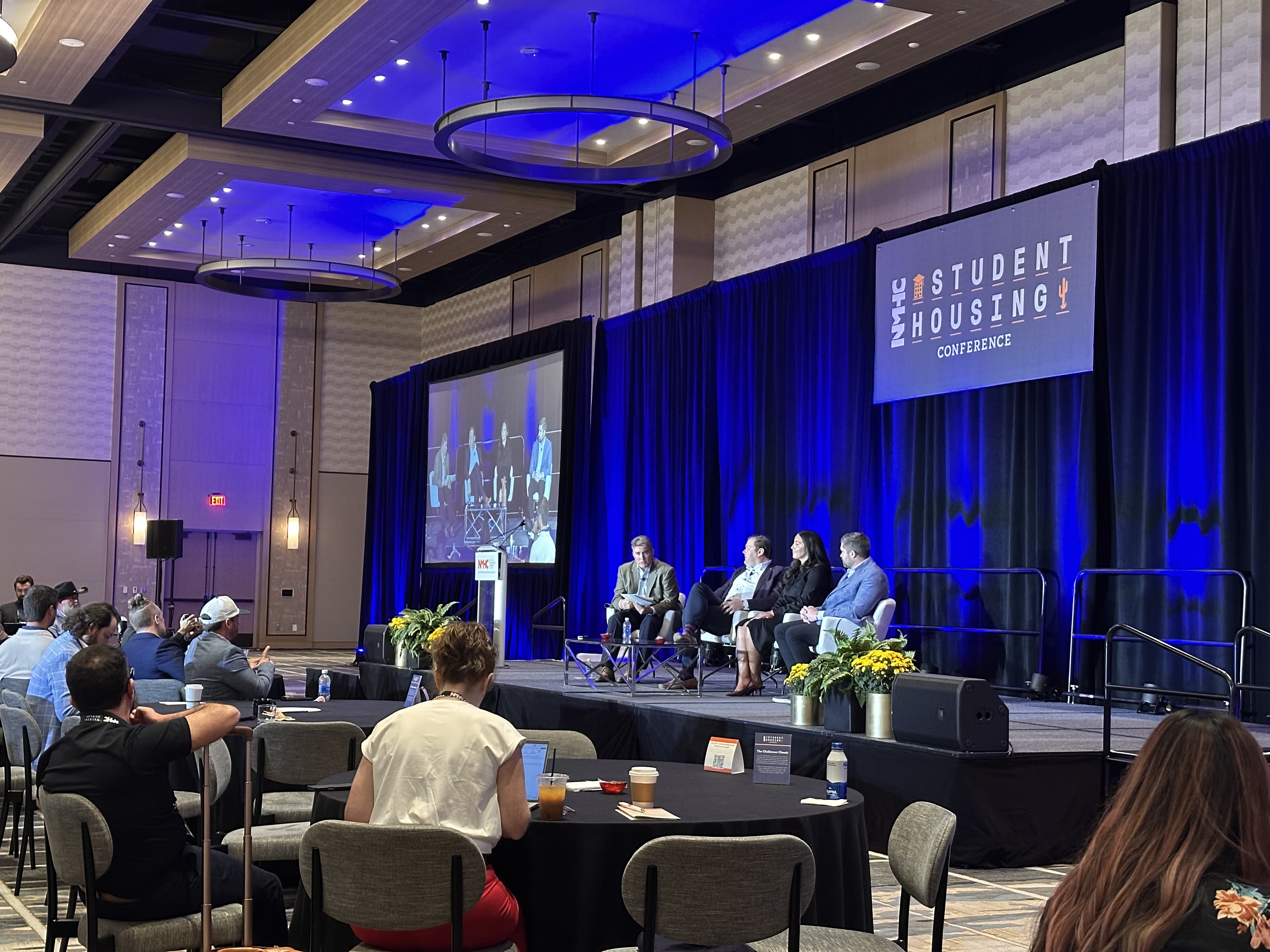
That was a central theme of the NMHC Student Housing Conference panel, What Students Want: Resident Expectations and the Student Housing Operating Model, featuring leaders from Preiss, Cardinal Group, and University Partners.
The discussion revealed an important shift in how operators are thinking about resident expectations. Students are becoming more discerning about where they spend their money, more intentional about which amenities they value, and more accustomed to seamless digital experiences. At the same time, their desire for community and genuine human connection remains strong.
For student housing owners and operators, meeting these expectations requires more than adjusting rents or adding amenities. It requires rethinking how the resident experience is delivered—and how those decisions translate into leasing performance, retention, and long-term asset value.
Here are five takeaways from the NMHC panel that stood out to us:
1. Affordability Is King, but Value Is What Ultimately Wins
Affordability dominated the conversation, and for good reason.
Adam Bryley, Chief Operating Officer at Preiss, identified affordability as the leading consideration influencing student housing decisions.
But one of the most interesting distinctions he raised was the difference between what students value and what they're willing to pay for. Students may appreciate luxury amenities, premium finishes, and proximity to campus. That doesn't necessarily mean they're willing to pay significantly more for them.
Jenna Giamba, Director of Operations at Cardinal Group, shared that recent resident surveys showed students prioritizing affordability over other considerations. Interestingly, students were willing to compromise on location to secure lower rents but were less willing to sacrifice privacy.
In markets where Cardinal operates both near-campus and more distant communities, Giamba noted that lower-priced properties farther from campus were sometimes leasing faster, particularly when shuttle transportation was available.
This challenges the longstanding assumption that proximity to campus automatically commands the strongest demand. Instead, operators need to understand the full value equation students are evaluating, including rent, transportation, convenience, privacy, and accessibility.
Showcase the Value Students Actually Care About
Rather than relying solely on premium amenities or proximity, operators can emphasize the specific benefits that matter most to their target residents.
For student housing operators, participating in marketplaces like College Pads, which connects students searching for off-campus housing with participating properties through a university-branded ILS, can help showcase important differentiators such as per bed or per unit pricing, property features, and proximity to campus to students actively evaluating housing options.
2. Students Don't Want More Technology. They Want Technology That Works.
Technology was another recurring theme, but the panelists were clear that simply offering digital tools isn't enough.
Bryley emphasized the importance of reliable, easy-to-use experiences. "Just making things work for the student in today's property is paramount," said Bryley.
Today's residents are accustomed to managing nearly every aspect of their lives digitally. They expect information to be accessible, processes to be straightforward, and routine transactions to happen without unnecessary delays.
But technology that introduces complexity instead of eliminating it can undermine the experience operators are trying to create.
The panel shared examples ranging from digital access credentials to AI-assisted communication and digital move-out refunds. The common thread was friction reduction.
Giamba described how Cardinal Group approaches automation across the resident lifecycle, focusing on speed and eliminating unnecessary obstacles from initial inquiry through move-out. Because the resident experience doesn't end when someone turns in their keys. Billing questions, refunds, and move-out charges can significantly influence a resident's final impression of a property.
For operators managing hundreds or thousands of beds, even small inefficiencies can multiply across the portfolio, increasing staff workload and creating inconsistent resident experiences.
Set the Standard from the First Interaction
Just as the resident experience doesn't end when students turn in their keys, it doesn't begin when they're handed over, either. The housing search is often a prospective resident's first interaction with a property, making it an important opportunity to establish trust and set expectations for the experience ahead.
With College Pads, student housing operators can connect with students through an intuitive, student-focused housing marketplace that makes it easy to discover properties, explore amenities, compare options, and connect with leasing teams. By removing friction from the earliest stages of the housing journey, operators can make a strong first impression and set the tone for the convenience, transparency, and accessibility students expect throughout their residency.
3. The Amenity Arms Race Is Giving Way to Intentional Experiences
For years, student housing development has been characterized by increasingly elaborate amenities. Resort-style pools. Expansive fitness centers. Movie theaters. Golf simulators. Luxury lounges.
But the panel raised an important question: How many of these amenities are students actually using?
Operators described evaluating amenity utilization, gathering resident feedback, and reconsidering spaces that generate ongoing maintenance costs without delivering meaningful resident value.
One particularly memorable observation came from Bryley. "I don't think you can ever have enough study space," he stated.
It's a simple statement with significant implications.
Students may be impressed by a luxury amenity during a tour, but the spaces that support their daily routines may ultimately provide greater value.
Chris Johnson, Chief Operating Officer at University Partners, reinforced the importance of ensuring amenities are actively used rather than simply marketed. He described visiting a property with an indoor basketball court that was rarely utilized, raising questions about how operators could better activate existing spaces, shifting investment from simply providing amenities to creating experiences around them.
A fitness center becomes more valuable when residents participate in wellness programming. A shared space becomes more meaningful when it facilitates connection. A basketball court becomes an asset when residents have opportunities to use it together.
For owners and operators, this is also a capital allocation question. Every underutilized amenity represents space that requires maintenance, staffing, and operating expenses. Understanding actual resident usage can help teams make more informed decisions about where to invest and where to repurpose existing assets.
Turn Amenities into Experiences That Drive Engagement
For those looking to turn existing spaces into meaningful resident experiences, StarRez's residence life programming capabilities can help operators organize resident activities, document participation, and understand engagement across their communities.
By tracking which activities resonate with residents, property teams can make more informed programming decisions and identify opportunities to increase the value of existing amenity spaces.
4. Wellness and Community Are Becoming Central to the Resident Experience
The conversation around wellness went far beyond fitness equipment or spa-inspired amenities. Panelists discussed the growing importance of mental health, emotional well-being, and creating environments where students feel supported and connected.
Giamba described how Cardinal Group has adapted its approach through wellness-focused resident programming, including running clubs, group activities, and community events. Importantly, she emphasized that delivering a strong hospitality experience doesn't always require significant financial investment. Sometimes, a thoughtfully organized activity can create more meaningful value than an expensive physical upgrade.
Bryley also highlighted the unique responsibility student housing operators have in shaping the college experience. Students spend substantial time in their residential communities. Those environments influence their relationships, routines, and sense of belonging.
This places operators in a position to support student well-being—not by replacing professional mental health services, but by fostering positive communities and helping residents connect with appropriate resources.
Johnson reinforced the importance of staff training, clear processes, and partnerships that prepare teams to respond appropriately when students need additional support.
For property managers, these efforts can also influence the long-term health of a community. Residents who feel connected, supported, and satisfied may be more inclined to renew, recommend their community to peers, and contribute to a positive property reputation.
Create Communities Where Residents Want to Stay
Community isn't simply a marketing message. It's an operational priority that can support resident satisfaction, reputation, and renewal performance. StarRez's Community Management Solution helps teams establish shared expectations, document resident agreements, and support healthier community interactions.
Combined with resident engagement and programming information, these capabilities can help operators build more intentional communities while maintaining consistent processes across properties.
5. The Future of AI Is About Empowering People, Not Replacing Them
Perhaps the most thought-provoking part of the panel came during the discussion of artificial intelligence and the future student housing operating model.
Panelists acknowledged the growing role of AI in communications, maintenance, data analysis, and operational efficiency. But they also challenged the assumption that automation should replace every human interaction.
Bryley argued that students increasingly want the option to choose between digital convenience and direct human support. His point was straightforward: AI can make routine interactions faster, but residents still value having someone available when a situation requires personal attention.
Johnson offered a complementary perspective. He described an ideal future in which technology handles more routine operational work, allowing on-site teams to spend less time behind desks and more time engaging with residents.
For property management companies, the goal of automation shouldn't simply be to reduce staffing costs. It should be to help existing teams deliver more consistent, responsive, and personalized service across every property.
The panel also emphasized the importance of turning data into action. Operators have access to increasingly sophisticated dashboards tracking leasing, maintenance, resident feedback, and operational performance.
But, "what are we doing about it?" asked Johnson, noting that collecting more information isn't necessarily the same as improving outcomes. That may be one of the most important questions facing the industry.
Identifying a recurring maintenance problem is valuable. Preventing it from repeatedly affecting residents is better. Recognizing declining satisfaction is useful. Understanding the underlying cause and taking corrective action is what creates meaningful change.
And for operators managing large portfolios, the real opportunity is identifying what works at one property and replicating those successful practices across others.
Smarter Operations, Stronger Human Connections
The most effective AI strategy isn't about removing people from the resident experience. It's about helping teams operate more efficiently while preserving the human relationships that drive satisfaction and retention.
StarRez Intelligence brings AI-powered capabilities into housing and residential operations, helping teams access information, identify patterns, and make more informed decisions.
Capabilities such as AI Insights, AI Package Scanning, and AI-assisted communications can reduce time spent searching for information or completing repetitive tasks.
For property operators, these capabilities can support greater operational consistency, faster decision-making, and more efficient use of staff resources.
The Next Chapter of Student Housing Starts with Operational Excellence
The overarching message from the NMHC panel was that student expectations are evolving, but delivering on them doesn't necessarily require more expensive amenities, more complicated technology, or entirely new operating models. It requires a sharper understanding of what residents genuinely value.
Affordability matters. Convenience matters. Privacy matters. Wellness and community matter. And increasingly, the ability to consistently deliver those experiences will distinguish successful operators.
For PBSA owners and property management companies, the opportunity is to connect resident satisfaction with measurable business performance.
When technology reduces friction, staff can focus on relationships. When data informs decisions, operators can allocate resources more intentionally. When programming reflects actual resident needs, communities become more engaging. And when those practices can be replicated across an entire portfolio, the benefits extend beyond the individual property. They create opportunities for stronger leasing performance, improved retention, more efficient operations, and sustainable long-term asset value.
Want to learn how College Pads can help you reach more students through university-backed housing marketplaces, or how StarRez can help you elevate resident engagement, streamline programming, and improve operational efficiency? Connect with our team to explore how we can support your property's success.
Share